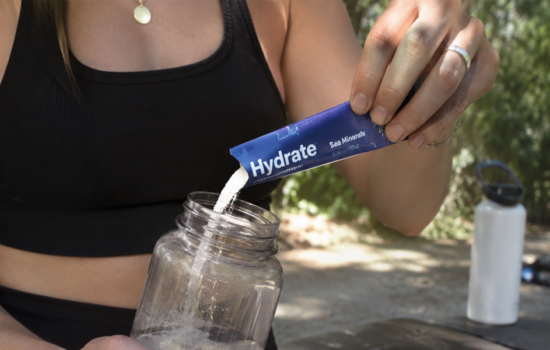


If you’ve been watching the wellness beverage space at all, you’ve seen the shift. Consumers don’t want to lug around tubs of powder anymore. They want something they can throw in a gym bag, tear open at their desk, or drop into a water bottle on the way to a trailhead. Stick packs — those slim, single-serve sachets of powder — have quietly become one of the most requested formats in the supplement and functional beverage industry. And for good reason.
We’ve seen it firsthand at The Apothecary. Of the manufacturing inquiries that come through our door, stick packs are consistently one of the top requested formats. Entrepreneurs launching electrolyte brands, founders building out loaded tea lines, existing supplement companies looking to extend into a more portable SKU. They’re all landing on the same format. Stick packs.
This guide is for you if you’re thinking about launching a stick pack product, switching manufacturers, or trying to understand what the production process actually looks like before you start requesting quotes. We’ll walk through what stick packs are, why the market is growing, how the manufacturing process works, what to look for in a private label partner, and how to think about formulation.
Why Stick Packs, and Why Now
The global stick packaging market was valued at approximately $990 million in 2025 and is projected to reach over $2.1 billion by 2036, growing at a compound annual growth rate of 7.1%, with the United States among the fastest-growing markets at 7.0% CAGR (Fact.MR). Food and beverage applications account for the largest share of that market, at roughly 41%.
That growth isn’t arbitrary. It’s driven by a few overlapping trends that aren’t going anywhere:
Convenience culture. Single-serve formats remove the friction of scooping, measuring, and carrying bulky containers. A box of 30 stick packs fits in a drawer. A tub of protein powder does not.
On-the-go supplementation. The “wellness everywhere” consumer doesn’t just take supplements at home. They want hydration packets in their hiking daypack, collagen in their travel bag, and adaptogens at the office. Stick packs are the only format that travels that well.
DTC and Amazon fit. Stick packs ship flat, pack efficiently, and photograph beautifully. They’re a natural fit for direct-to-consumer brands and Amazon listings, where packaging aesthetics and shipping economics both matter.
Subscription box and sampling. Because they’re single-serve by design, stick packs are ideal for sampling, gift kits, and subscription box inclusions, making them a strong acquisition tool for emerging brands.
The loaded tea and functional beverage category, in particular, has exploded. Concepts like mushroom cocoa blends and adaptogen drink mixes that were niche five years ago are now mainstream wellness staples. The stick pack format has been central to that mainstreaming.
What Can Go Into a Stick Pack?
Almost anything in powder form can be produced as a stick pack. Here’s a breakdown of the most common formulation categories we work with:
Electrolytes and Hydration The most requested category by volume. Sodium, potassium, magnesium, with optional additions like B vitamins, coconut water powder, or trace minerals. Clean-label electrolyte formulas are in high demand, especially for brands positioning away from artificial colors and sweeteners.
Functional Mushroom Blends Lion’s mane, reishi, chaga, cordyceps, functional mushroom powders blend well into stick pack formats, either as standalone mushroom drinks or blended into superfood cocoas, matcha, or coffee alternatives. We offer our own adaptogenic mushroom cocoa as a great example of what’s possible in this space.
Collagen and Protein Peptides Collagen peptides and plant-based proteins in stick pack form have seen significant growth, especially in the beauty-from-within category. These pair well with flavoring agents and dissolve cleanly in hot or cold water.
Greens and Superfoods Spirulina, chlorella, wheatgrass, and blended greens powders. This category works well for brands targeting the daily wellness routine consumer.
Vitamin and Supplement Blends Vitamin C, zinc, elderberry, and immune support blends lend themselves naturally to a single-serve stick format. The “daily packet” format has strong consumer compliance, and it’s easy to remember to take.
Pre-Workout and Energy Caffeine-forward formulations with B vitamins, amino acids, and adaptogens. This segment is large and competitive, so differentiation through clean ingredients and unique functional ingredients matters.
Drink Mixes and Flavored Beverage Bases Everything from cacao blends to lemonade mixes to functional coffee. If you’re curious what’s possible in this space, browse the functional drink mix category, it gives a good sense of the flavor and functional territory available to emerging brands.
How Private Label Stick Pack Manufacturing Works
Understanding the production process helps you ask better questions and avoid surprises. Here’s what the journey typically looks like.
Step 1: Formulation
You either bring your own formula or work with a manufacturer to develop one from scratch. At The Apothecary, we include custom formulation in our manufacturing partnerships, you don’t need to come in with a finished spec sheet, though you can if you have one. We’ll sign an NDA before reviewing any proprietary formulas.
If you’re starting from scratch, expect a few weeks of back-and-forth on ingredient selection, ratios, flavor profiling, and label compliance. We also discuss whether you want certified organic ingredients, wildcrafted botanicals, or conventional sourcing.
Step 2: Sample Development
Before committing to a full production run, you’ll receive samples. At our facility, sample development starts at $300 per SKU and typically takes one to two weeks. We include multiple revision rounds — flavor, color, solubility, texture — until the product is dialed in. Fifty percent of your sample development fee is credited back toward your first production order.
This step is non-negotiable, and you should be wary of any manufacturer that skips it or rushes it. Your stick pack has to dissolve cleanly, taste right, and survive shelf life before it goes into production.
Step 3: Packaging Selection and Procurement
Stick packs are produced on specialized stick pack assembly machines that fill and seal individual sachets. The packaging itself (the film laminate that forms the stick) comes in various materials (BOPP, foil laminate, kraft) with different barrier properties depending on your product’s moisture sensitivity and shelf life requirements.
You’ll also make decisions about:
- Stick dimensions — standard widths are typically 30mm to 40mm, with length varying based on fill weight
- Fill weight — most stick packs run between 3g and 10g of powder, though heavier fills are possible
- Sealing style — top seal, bottom seal, and side seal options
- Printing — digital printing on film allows for full-color custom branding
At our facility, stick pack assembly starts at 5,000 individual sticks as a minimum order. That’s a reasonable entry point for an emerging brand. Enough to launch, run a sampling campaign, and test market response without overcommitting to inventory.
Step 4: Production Run
Once packaging is ordered and the formula is approved, production moves quickly. A typical run at our facility takes three to six weeks from formula approval to finished goods, faster for simpler formulas, slightly longer for complex blends with multiple active ingredients.
During production, batch records are maintained for every run. If you’re selling supplements, this documentation is essential for FDA compliance and any future audits.
Step 5: Fulfillment
Finished stick packs can ship directly to your warehouse, to Amazon FBA fulfillment centers, or to a third-party logistics provider. We handle fulfillment-ready packaging so products arrive sealed, labeled, and ready for sale.
What to Look for in a Private Label Stick Pack Manufacturer
Not all contract manufacturers are built the same, and the stick pack category in particular has some nuances worth understanding before you sign anything.
FDA Registration For any supplement or functional food, your manufacturer should be FDA registered. This isn’t optional if you’re selling in the United States. It’s a baseline requirement. Ask for the registration number and verify it.
GMP-Aligned Production Good Manufacturing Practice compliance means your manufacturer is operating with documented processes, batch records, ingredient traceability, and quality controls. It doesn’t mean they have a certificate on the wall. It means the actual production environment is clean, documented, and auditable.
Low MOQs One of the biggest barriers to entry for emerging brands is minimum order quantities. Large co-packers often require 50,000 to 100,000 units before they’ll touch your project. Boutique manufacturers can often work with 5,000 to 10,000 unit minimums, which is a very different capital commitment for a brand just launching.
Formulation Support If you’re not a food scientist or a formulator, you need a manufacturer who can help you develop your product, not just fill a spec you bring in. Custom formulation support is a significant value-add that not every facility offers.
NDA and IP Protection Your formula is your competitive moat. Any legitimate manufacturer will sign a non-disclosure agreement before reviewing your formulation. If they won’t, walk away.
References and Transparency Ask who else they manufacture for (even if specifics are confidential), what their lead times actually look like, and what happens if something goes wrong. A good manufacturing partner communicates proactively, not just when you chase them.
Formulating for Stick Pack Success: Practical Tips
A few things that make the difference between a stick pack that sells and one that gets returned:
Solubility matters more than you think. A stick pack that clumps, doesn’t dissolve, or leaves residue at the bottom of a glass is a customer service problem waiting to happen. Test in cold water, warm water, and shaker bottles. If your formula has high-dose fiber or protein, solubility engineering is worth the investment.
Sweetener choice shapes perception. The sweetener you choose (like stevia, monk fruit, allulose, erythritol, cane sugar, or nothing) will define how your product is perceived in the market. Clean-label brands are increasingly moving away from sucralose and aspartame, and for good reason. Know your audience.
Flavor stability in powder form is different from liquid. Natural flavors degrade differently in powder formats than in liquids. Work with a manufacturer who has experience with shelf-stable flavoring and can tell you expected flavor retention at 12 and 24 months.
Packaging barrier properties protect your formula. High-moisture or high-humidity environments will degrade certain active ingredients, particularly probiotics, sugars, enzymes, and some B vitamins. Your packaging film needs the right barrier properties for your specific formula. Don’t just pick the cheapest film.
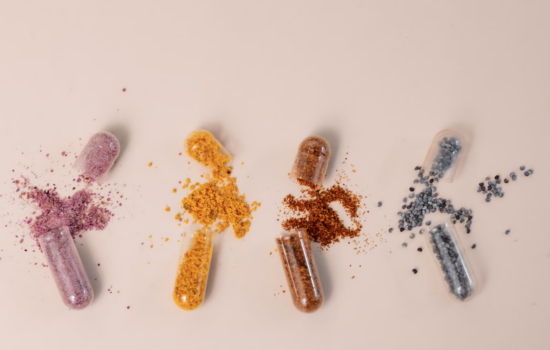
Consider the visual experience. When a consumer tears open a stick pack, the powder color, the aroma, and the dissolution experience are all part of the product. A vivid golden turmeric blend or a deep purple elderberry powder can be part of your brand story. Don’t ignore aesthetics.
Private Label vs. White Label: Which Is Right for You?
These terms get used interchangeably, but they mean different things:
Private label manufacturing means we develop or produce a formula specifically for your brand. The formulation is custom. It may be entirely new, or it may be adapted from a base formula, and it belongs to you. This is the right path if you want a differentiated product that competitors can’t easily replicate.
White label manufacturing means you’re selecting from an existing, proven formula and putting your brand on it. Faster to market, lower development cost, lower risk. The tradeoff is that other brands may be selling a similar or identical product.
For stick packs, we generally recommend private label if you’re launching in a competitive category (electrolytes, pre-workout, greens) where differentiation is what gets you shelf space and customer loyalty. White label makes more sense for lower-stakes SKUs or brands that need to move fast and iterate.
Already Have a Formula? Switching Manufacturers Is Easier Than You Think
One of the more common conversations we have is with brands who are unhappy with their current manufacturer: inconsistent quality, communication problems, MOQs that have ballooned as the co-packer grew, or simply outgrowing the relationship.
Switching is more straightforward than most founders expect. If you own your formula (and you should! Make sure your contract specifies this), you can bring it to a new manufacturer and begin the sampling process. We’ll sign an NDA, review your spec, and let you know within a few days whether we can match or improve your current production.
We’ve helped brands migrate from large co-packers who couldn’t give them the attention they needed, and from overseas manufacturers who created supply chain headaches. Domestic manufacturing means shorter lead times, easier communication, and no tariff uncertainty.
Ready to Get Started?
Launching or expanding a stick pack line is one of the most accessible ways to enter the functional beverage market. The format travels well, photographs beautifully, and connects deeply with today’s on-the-go wellness consumer.
At The Apothecary, we work with emerging brands and established companies alike, from founders launching their first SKU to companies reformulating an existing line. Our facility is FDA registered, Oregon DOA licensed, and GMP-aligned. We offer custom formulation, sample development starting at $300/SKU, and stick pack production starting at 5,000 individual sticks.
If you want to understand more about our full range of manufacturing services, from capsules to honey gummies to essential oils, head over to our private label manufacturing page. And if you’re ready to talk about your specific project, you can request a quote and we’ll be back to you within one business day.
We also wrote more about how The Apothecary came to offer private label manufacturing in the first place — that story is here, if you’re curious about who you’d be working with.

Jesse Richardson is a brother and co-founder of The Brothers Apothecary. Jesse studied Political Science at the University of California, Los Angeles and Medicinal Plants & Ethnobotanical Research at Cornell University. He is an avid student of nature and is always working on something new at The Apothecary!